Health and Safety Policy for Removal Companies in London
n This Health and Safety Policy sets out the expectations and practical measures for removal companies operating in urban environments. It outlines responsibilities for management and crews to ensure safe removals, protect staff, clients and the public, and promote a culture of continuous improvement. The policy applies to all staff, contractors and operatives involved in any removals activity.
The primary aim is to prevent accidents and occupational ill health through systematic risk management. A responsible removal company in London should carry out regular hazard identification and adopt controls that reduce exposure to risks. Prevention principles cover planning, safe systems of work, suitable equipment, and clear communication between teams and clients.
n Key responsibilities are shared. Senior management must provide leadership, resources and oversight, while supervisors and crew members must follow procedures and report hazards. Everyone should be able to access training, personal protective equipment (PPE) and clear instructions for each task to keep both staff and customers safe.
Risk Assessment, Training and Competence
nRisk assessment is central to safe removals. Each job should have a written or documented assessment identifying site-specific risks such as constrained access, uneven floors, narrow stairways, or communal areas. Controls may include additional manpower, mechanical aids, protective coverings and traffic management where necessary. London removal companies should standardise assessment templates to make consistent, auditable decisions.
n Training ensures that staff are competent in manual handling, equipment use, safe loading and vehicle securing. Training records must be maintained and updated regularly. A robust induction and refresher programme promotes best practice and ensures operatives are familiar with emergency procedures and safe lifting techniques.
Supervisors should monitor performance and coaching should be available to address observed unsafe acts. Competence also covers understanding of hazardous materials, fragile items and how to protect members of the public and customers’ property during moves.
nSafe Systems, Vehicles and Equipment
n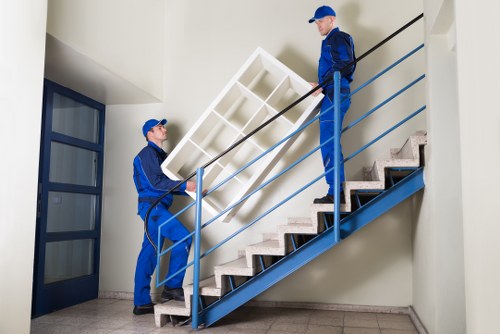 Vehicles and equipment must be maintained in a safe, serviceable condition. Pre-shift checks, routine servicing and secure loading practices are essential for any removal firm in London to reduce incidents on the road and during handling. Equipment such as trolleys, tail lifts and harnesses should be inspected and defects reported immediately.
Safe systems of work include clear loading plans, weight limits, and segregation of hazardous items. A simple checklist for each job helps teams apply controls consistently. Use of protective packaging, corner protectors and floor coverings reduces damage and slip risks during transit.
nKey controls include:
n- n
- Pre-job planning and site assessment n
- Use of appropriate PPE such as gloves, high-visibility clothing and safety footwear n
- Mechanical aids and team lifting for heavy or bulky items n
- Secure stowage and vehicle load restraint n
- Clear client briefings and signage where required n
Hazardous Substances, Manual Handling and Site Safety
nHandling of hazardous or regulated materials must be minimised and, where unavoidable, managed by competent personnel. Clear labelling and segregation reduce risk. Teams should refuse to move unidentified hazardous waste and follow escalation procedures to protect everyone on site.
nManual handling techniques are reinforced through training and practical assessment. When lifting is unavoidable, a removals company London should encourage mechanical aids and team lifts, balanced planning to reduce repeated strain, and rotation of duties to limit cumulative load injuries.
nSite safety includes managing pedestrians, stairs, lifts and communal corridors. Where access is restricted, additional time and resources must be allowed in the job plan to maintain safety standards without rushing.
nIncident Reporting, Communication and Review
n Incidents and near misses must be reported promptly through an established system so that lessons can be learned. Investigation should focus on root causes and lead to corrective actions and updates to procedures. Transparent communication with staff encourages reporting and continuous improvement.
Routine audits and performance reviews help ensure the policy remains effective and aligned with operational realities. Management must review records, training logs and incident trends to identify improvement opportunities and resource needs for sustained safety performance.
nIn summary, a practical Health and Safety policy for removal companies emphasises planning, competence, safe equipment, and an open safety culture. By embedding clear procedures, regular training, and diligent monitoring, removals companies can protect their people, clients and the public while delivering reliable moving services across urban environments.
n